—
CALM LIVING
What a Home That Works for You Actually Feels Like

Ella Cole
Close your eyes for a moment and imagine this.
You wake up on a weekday morning. Your alarm goes off, and instead of that familiar low-level dread about the day ahead, you feel something closer to calm. Your bedroom is quiet and clear. The nightstand holds only what you need. You move through the room without stepping over anything.
You open your closet, and you can see your clothes. All of them. You know where everything is. Getting dressed takes five minutes, not fifteen.
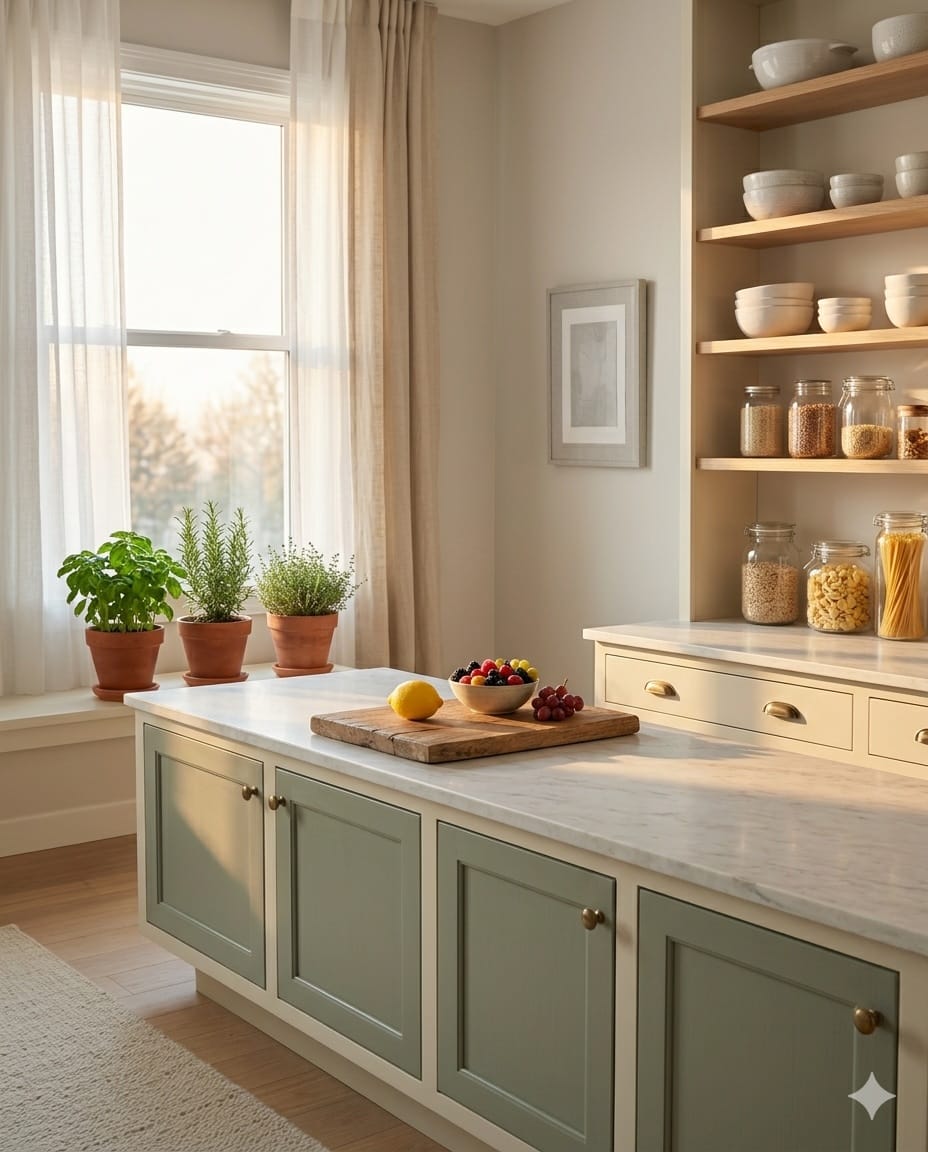
Downstairs, the kitchen is ready for you. The coffee maker is where it always is. The counter is clear. You know exactly what is in the pantry because you just restocked it and everything has a place. Breakfast happens without a search mission.
This is not a fantasy. It is not a magazine spread or an aspirational Instagram post. It is what a home that works actually feels like from the inside — and it is available to you.
A Morning That Flows
The morning is the part of the day when organization pays off most visibly. Because mornings have almost no margin for friction. They run on tight schedules and limited mental bandwidth. Every search for something, every drawer that jams, every minute spent locating the thing that needs to be somewhere it is not — those minutes accumulate into a morning that starts on the back foot before you have even left the house.
In a home with working systems, the morning runs differently. Not because anything magical has happened, but because the decisions about where everything lives were made thoughtfully in advance, and the environment makes the routine automatic.
Children’s backpacks are at the hook by the door because that is where the system says they go. Lunches are easier to make because the pantry and fridge are visible and organized. Keys are where they always are. The day starts from a position of calm rather than a sprint to catch up with it.
Most people have never experienced a consistent run of smooth mornings, so it is hard to appreciate what they would feel like. But the cumulative effect of starting each day without friction is profound — more patience, more energy, and more of yourself available for the things that actually matter.
The Kitchen You Actually Want to Cook In
There is a version of your kitchen that makes cooking feel like something you want to do.
In that version, you can see what you have. The things you reach for every day are right where your hand naturally goes. The counter has space to work. Meals come together without a hunt through three cabinets and a silent argument with a utensil drawer that will not close.
When the kitchen works, it changes not just how you cook but how you feel about being in your own home. The kitchen is where most families spend the most time together. It is where the day begins and where it winds down. When it is a pleasant space to be in — calm, functional, easy — that ease extends into the whole household.
The opposite is also true. A kitchen that does not work becomes a source of daily frustration that is so familiar it almost disappears into the background. Until you experience it differently and realize how much energy it was taking.
Coming Home
There is a moment every evening when you open your front door and walk into your home. That moment sets the emotional tone for the rest of the night.
In a home that works, that moment feels like arriving. There is somewhere to put things down. The transition from outside to inside is smooth. The house does not immediately present you with a list of problems to solve.
In a home that is not working, that moment often feels like walking into another set of demands. The pile by the door. The counter that accumulated through the day. The rooms that are slowly reverting to the state they were in before you spent Saturday organizing them.
The difference is not about a perfectly clean house. It is about an environment that has a system — where things have places, where the daily accumulation of a busy household has somewhere to go, and where a 10-minute reset each evening can return things to calm.
Coming home should feel like relief. That is what a home that works actually offers you.
The Bedroom That Restores You
Your bedroom has one job: to help you rest and recover.
When it is filled with clutter, with reminders of unfinished tasks, with things that belong elsewhere and never quite made it there — it cannot do that job. Your nervous system reads the visual complexity as a signal that work remains to be done, and it stays subtly alert even as you are trying to wind down.
A bedroom that works is not a magazine bedroom. It does not require expensive furniture or a renovation. It requires that the room contain only what belongs in a room for rest and getting dressed — and that everything in it has a clear, consistent home.
When those conditions are met, something shifts in how the room feels at the end of the day. Walking into a clear, calm bedroom is a physiological exhale. It signals to your body that the day is over. That permission to rest, delivered by the environment itself, is one of the quieter gifts of a well-organized home.
The Weekend Morning You Have Been Waiting For
Here is the version of the weekend morning that a well-organized home makes possible.
You wake up without an agenda pressing on you. The house is not in a state that needs to be addressed before you can relax. There is no catch-up list from the week. You make coffee in a kitchen that is ready for you, and you sit somewhere comfortable and quiet.
Weekends in a well-organized home can actually be weekends — time for rest, for family, for the things you love, rather than time spent recovering from the week and preparing for the next one.
This is not a small thing. The quality of your time at home is a significant part of the quality of your life. A home that requires constant management and maintenance steals that time. A home that runs on good systems gives it back.
What Is Really at Stake
When we talk about home organization, it is tempting to talk about the aesthetics — the neat pantry, the labeled bins, the cleared counters. And those things are real and they matter.
But the deeper thing that is at stake is your time, your energy, and your peace of mind.
Every minute spent searching for something is a minute taken from something else. Every morning that starts in friction sets a tone that follows you into your day. Every evening spent managing the household instead of being present in it is an evening that does not come back.
An organized home does not solve the big challenges of a busy life. But it removes the layer of daily friction that those challenges do not need to be made harder by. It creates space — literal and mental — for what actually matters to you.
That is what is really being organized. Not the closet. Not the pantry. Your life.
This Is Not a Dream
The home described in this post is not out of reach. It is not reserved for people with more time, more money, or more discipline. It is the result of having the right systems in place — systems designed for your real life, your real household, and your real routines.
Some people build those systems on their own over time. Others get there faster and with better results by working with someone who does this every day and knows exactly what works.
Either way, the destination is the same: a home that feels like it belongs to you. That works for you. That gives you back the calm, the ease, and the breathing room you deserve.
That home is closer than you think.
More Guides
ready to begin?
Let us help you create a home that brings peace to your daily life.
No pressure, just ideas and a clear plan. Book a consultation and let’s design calm, organized spaces that actually stay that way.