—
CALM LIVING
The 5 Spaces in Your Home That Will Transform Your Daily Life When Organized

Ella Cole
Some spaces in your home affect your daily life so profoundly that organizing them creates a ripple effect across your entire household. Your mornings get smoother. Your evenings feel calmer. That low-level background hum of household stress gets noticeably quieter.
Other spaces matter too — but they are not the ones where organizing pays off most immediately or most durably.
If you are going to invest your energy and effort into organizing your home, these are the five spaces to prioritize first. Each one was chosen not because it looks the most impressive when organized, but because it directly affects the quality of your daily life.
1. The Kitchen and Pantry
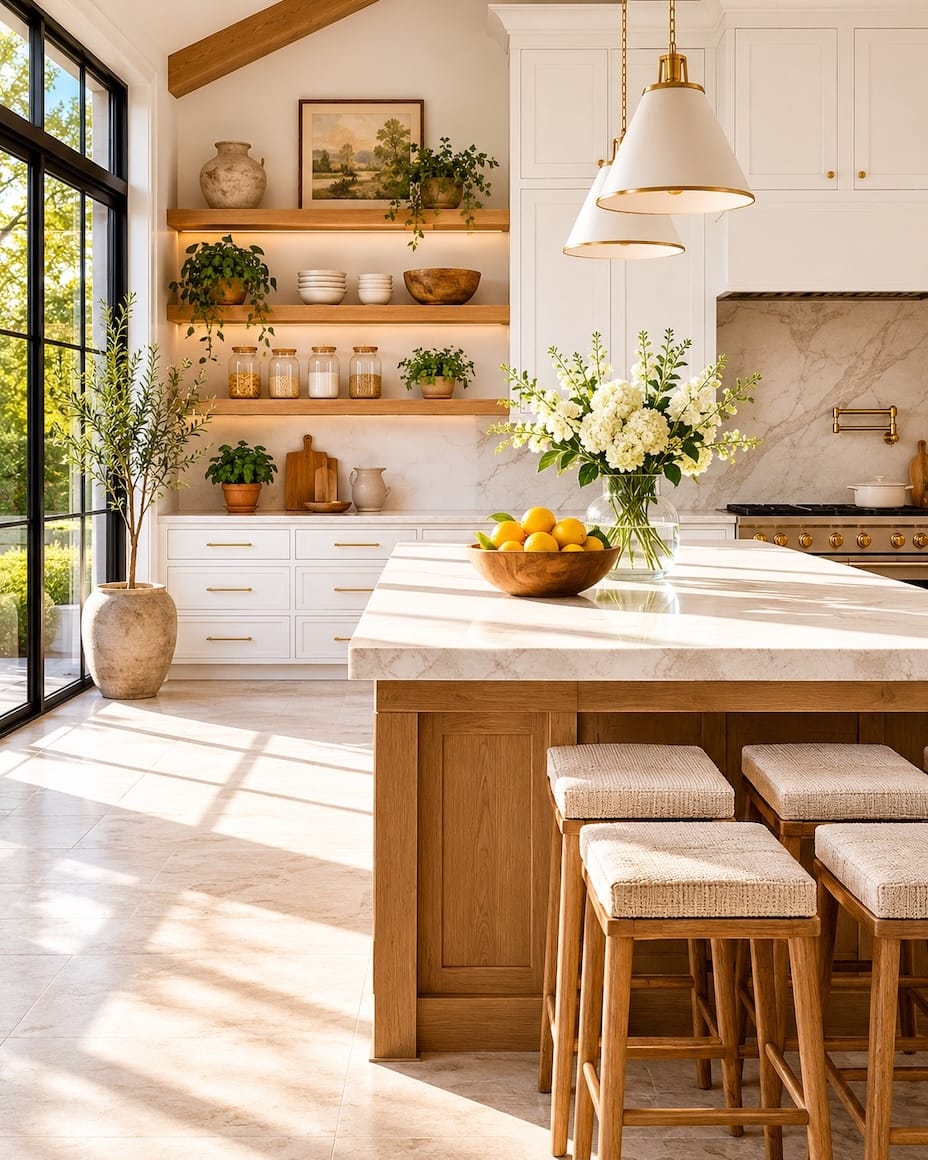
The kitchen is the most-used room in most homes. It is where the day starts, where meals are planned and prepared, where the family gathers, where groceries arrive and get put away. It is also the space where disorganization has the most immediate and measurable cost.
A disorganized kitchen costs you time every single day — in small increments that add up to hours over the course of a year. It costs you money through forgotten food, duplicate purchases, and meals that do not get made because it felt like too much effort to navigate the chaos. And it costs you the mental energy you need for everything else.
An organized kitchen does the opposite. When you can see what you have, find what you need, and move through the space with ease, cooking feels less like a chore and more like something you actually want to do. The system that makes this possible is built on a few principles:
- Zones: group items by how they are used, not just by category
- Visibility: if you cannot see it, you will not use it -- especially in the pantry
- Frequency: the things you reach for every day should be the easiest to access
- Breathing room: no shelf or drawer should be at full capacity
The pantry is often the highest-leverage single space in the entire home. A well-organized pantry reduces food waste, simplifies meal planning, and takes a daily source of frustration and turns it into something that just quietly works.
2. The Primary Closet
Your primary closet is the first space you interact with every morning. When it works — when you can see your options, find what you are looking for, and get dressed without friction — the whole day starts differently. When it does not work, mornings begin with a low-level battle that sets a tone you carry with you.
Closet organization is about more than folding and hanging. It is about understanding how you actually get dressed: what you wear regularly, what you never reach for, where your eye naturally goes, and what the morning routine of your household actually looks like.
A well-organized primary closet:
- Shows you what you have, so you stop buying duplicates of things you already own
- Eliminates the guilt of items you keep for reasons that no longer apply
- Reduces morning decision fatigue by making your actual wardrobe easy to navigate
- Makes getting ready feel like the start of a good day rather than the first obstacle in it
The release of items that are no longer serving you is also one of the most emotionally freeing parts of the organizing process. A closet full of clothes you actually love and actually wear feels completely different from one that is full but somehow always feels like it has nothing to wear.
3. The Entryway and Drop Zone
The entryway is the transition point between the outside world and your home. It is also the space that gets hit by the full force of everyone’s arrival every single day: bags, shoes, coats, backpacks, sports equipment, mail, keys, and everything else that comes through the door.
When this space works, the transition into your home is smooth. Things land where they belong. The household does not start unraveling the moment people walk in.
When it does not work, the entryway becomes a dumping ground that spreads. Items migrate from the door to the hallway to the kitchen counter. Keys go missing. Backpacks are forgotten. The chaos that greets you every time you come home subtly colors your entire sense of the house.
A functional drop zone system is one of the highest-return investments in whole-home organization because it is designed for the most predictable, repeated behavior in the home. It accounts for:
- Where bags and backpacks actually land -- and makes that place intentional
- Hooks and shelves at the right height for each person in the household
- A designated spot for keys, mail, and daily essentials
- Enough space that it can absorb daily use without looking cluttered
4. The Laundry Room
The laundry room is one of the most underestimated spaces in the home. It is used almost every day. It connects directly to closets, bedrooms, and the whole rhythm of keeping the household running. And when it is disorganized — products everywhere, no clear system, laundry backed up — it becomes a source of persistent, low-level stress.
An organized laundry room changes the experience of doing laundry itself. When everything has a place, the task is straightforward. Products are easy to find. There is a clear system for sorting, washing, and returning clean clothes to where they belong.
Even in a small laundry room, a few well-designed systems make an enormous difference:
- Sorting built into the system so laundry does not pile on the floor
- Products stored accessibly but not cluttering the workspace
- A clear flow from dirty to clean to folded to put away
- Storage for supplies like extra hangers, stain treatment, and clean rags
A well-organized laundry room does not make laundry fun. But it makes it significantly less miserable — and that is worth quite a lot over the course of a year.
5. Kids' Spaces: Playrooms, Bedrooms, and Homework Areas
They also change constantly — what works for a six-year-old is completely wrong for a ten-year-old.|
But organized kids’ spaces have a value that goes beyond aesthetics. When a child’s environment is set up with clear, accessible systems they can actually understand and follow, something changes. They are more likely to put things away. They spend less time looking for what they need. The morning routine runs more smoothly. And the end-of-day stress of a completely destroyed room becomes significantly more manageable.
Effective kids’ space organization is built on a few key principles:
- Systems at their level: storage they can actually reach and use independently
- Visual clarity: clear bins, simple labels with pictures for younger children
- Less is more: toys and supplies that are edited regularly are ones that actually get used
- Age-appropriate responsibility: systems that invite children into the habit of maintaining their space
An organized kids’ space also has a quieter benefit for parents: it reduces the daily negotiation and nagging around cleanup, because the system makes it obvious and easy for the child to do it themselves.
The Order That Makes Sense
If you are tackling these spaces on your own, the kitchen and pantry is often the best place to start — because the daily impact is immediate and the wins are visible quickly. The entryway is a close second, especially in households with children.
If you are working with a professional organizer, they will help you determine the right sequence for your specific home and the goals that matter most to you. Sometimes the space that needs the most urgent attention is not the one that will have the biggest overall impact — and an experienced organizer can help you see that clearly.
What Comes Next
Every one of these five spaces has the potential to meaningfully improve the quality of your daily life — not in a vague, aspirational way, but in the very concrete way of mornings that work, evenings that feel manageable, and a home that supports you rather than demands from you.
You do not have to tackle all five at once. You just have to start with one.
Pick the space that is causing the most friction in your daily life right now. That is the one to begin with. The momentum from a single well-organized space has a way of making the rest feel possible.
More Guides
ready to begin?
Let us help you create a home that brings peace to your daily life.
No pressure, just ideas and a clear plan. Book a consultation and let’s design calm, organized spaces that actually stay that way.